When reading Calvino's Invisible Cities, I interpreted the each city as a different way to interpret the world. It was an interesting way to see one city be a perspective that makes different cities. I really like the idea that if the cities were based on Venice, Italy even though you can read a city about a desert and water.
I was interested in Despina because it had another interpretation of two views that when looking at them create the image of different cities in the way that one can see the city from a desert or water perspective.
Thursday, December 15, 2016

Monday, December 12, 2016
final project: zine with container


zine: for the zine i used executive paper and i did laserjet color copies. the covering of the zine is made out of synthetic leaves sewn together and to bind the two together i used hemp string.
items: for my items i chose a crystal quartz, sage that i wrapped in the same hemp string as the binding on the zine, a vial with incense pieces, a vial with live crickets and a wire ring.
container: for the container i chose to cast a box out of concrete using a mold made of legos. i used quickcrete and to get rid of some of the gravel i sifted it using a strainer.
concept: in my zine i wanted to depict a sort of abstracted palace or temple that was abandoned but not in ruins. the first page is the view from the outside and each page represents a different room, the last page represents the final room where you find the container with all the items. the box is supposed to show the skill that the culture had in creating cast objects and the items in the box are supposed to be relics that held importance to the everyday lives of the people of the temple. for example, the ring (along with the box) was supposed to show that the people were craftspeople; the sage, incense and the quartz were supposed to show a sort of belief in metaphysics and the crickets were supposed to be set free in the box so that they could jump when the box was opened to show that it had been in that room of the temple for a long time. (but i figured it wouldn't be good for class).
story building exercise: mood,action,topic

action: suppressing
topic: coping with stress
the small works i did for this assignment is a sort of narrative in which i embody stress as messy red lines that goes all around and out of its frame which represents the mind and is eventually suppressed by its frame and compacted into a little ball.
1st panel: the stress represented by the red lines is going all over the place un controlled and escaping its frame
2nd panel: the frame is starting to fight back and attempting to contain its stress
3rd & 4th panels: the frame begins to win and is able to cope with its stress and form it into a little orb
Wednesday, November 9, 2016
invisible cities: despina

Tuesday, November 8, 2016
writing assignment: the street/ the garden
i want to live in a world where grass is growing on everything. the cars will be abandoned and turned into gardens. nature will make urbanity get lost. i want a place where nature won't be a hidden place. i want a place where the streets are unrecognizable. vines will be vines again and not just short videos. humans will no longer dictate the future of the planet but they will simply coexist with the earth while they live then dissolve back into earth when they die. finding food will be as easy as going to your closest tree and eating the fruits. urban development will disappear. roads will be abstracted by the forests. animals and humans can live in peace. nature and humans can live in peace. humans will become a part of nature again. living will be easy. nature will be happy. i will be happy.
the street: small work

the garden: small work

Thursday, October 27, 2016
Small Works and In-Depth Preparation: Research
- Buckminster Fuller--When was he working?
-he worked during the 40s but recieved the most recognition for his work in the 50s
- Ha-has (recessed walls)--where do you find these?
-they can be found in England and France but might have origin in asia
- Parco del Mostri--Where, when, what's your favorite image?
-it was made during the 16th century in lazio,italy

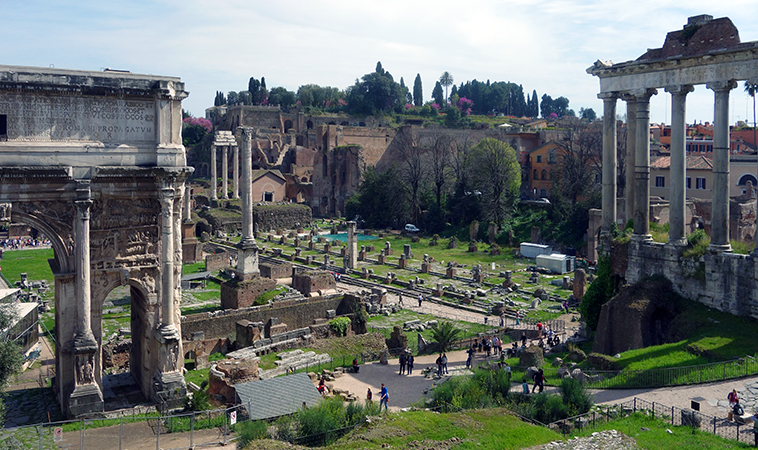
- Roman Forum--What function did it have? Where, when, what's your favorite image?
-the plaza(forum) was built in the middle of political buildings in rome and they used it for events like speeches,trials,gladiator matches and other stuff.
- Boboli Garden--Where, when, what's your favorite image?
-the boboli gardens are located in firenze italy and is dated to the 16th century

- Jardin du Luxembourg--Where, when, what's your favorite image?
-it was made in 1612, located in paris.
- Tivoli Garden (Italy)--Where, when, what's your favorite image?
-this garden is located near rome in tivoli and it dates back to the 16th century.
- Bernini's Four Rivers--Where, when, what's your favorite image?
-it was built in 1651 in rome for pope innocent x.

- Jean Dubuffet's Jardin d'Emaille--Where, when, what's your favorite image?
-this "garden" is essentially a giant sculpture made in 1974 in the netherlands.
- Stowe Garden--Where, when, what's your favorite image?
-it is located in england and it was made around 1680.

- Stourhead Garden--Where, when, what's your favorite image?
-this place is in england and it was built around 1725.

- Washington DC parks (any park space, structure, monument, or public artwork of your choice)--Where, when, what's your favorite image?
-hillwood estate,once home to john quincy adams

- Viscaya Museum--Why is this in Miami? What is it named after? Who is responsible for it being built? Where, when, what's your favorite image?
-it is located in miami because james deering wanted a winter home so he came to miami for its weather. james deering wanted it to have a sort of european name so he named it after an explorer named vizcaino and it was designed by paul chalfin.

- Fairchild Tropical Garden--Why is this in Miami? Who is it named after? Where, when, what's your favorite image? it is named after famous plant explorer david fairchild, it is in miami because robert h montgomery had a dream of having a botanical garden in miami it opened to the public in 1938.

Sunday, October 23, 2016
green dreams: gardens
in my opinion the first page was really well written then after that it just became confusing. the line that says: "Every garden is a replica, a representation, an attempt to re capture something" really stood out to me from the rest; to me that was the best written part of the entire passage. this line brought me to a sort of understanding of what a garden really is: just a representation of a landscape that is man made. it serves a similar purpose as a painting or sculpture in its ability to mimic a real place in nature but in the end is just as man made as any work of art.
the idea of the reading that is most important the idea that a garden is still natural. a human can only decide where to place each plant but in the end nature is a part of the job. for example, a human can plants all the seeds in a garden and let them grow in any way and nature will always finish the job of watering, giving sunlight and letting plants grow into any shape or form they wish but the same human will have total control over a painting and the end result of the painting will have nothing to do with nature in the way it is completed.
the idea of the reading that is most important the idea that a garden is still natural. a human can only decide where to place each plant but in the end nature is a part of the job. for example, a human can plants all the seeds in a garden and let them grow in any way and nature will always finish the job of watering, giving sunlight and letting plants grow into any shape or form they wish but the same human will have total control over a painting and the end result of the painting will have nothing to do with nature in the way it is completed.
Friday, October 21, 2016
rhinoceros: metamorphosis in depth


 |
concept: i wanted to make a sort of backwards metamorphosed mark making tool out of the most common mark making tool around today.
process: i sharpened pencils using a sharpener and a blade then took the shavings and burned them. after that i mixed in a bit of ink to give the ashes a more solid consistency and i mixed the combination for about an hour. then i tested it and thought of how to display it.
Wednesday, October 12, 2016
rhinoceros: portrait/propaganda


the second piece being the propaganda is an blurred photo of my self with a weak frame held together by wire to symbolize my mind and show the only thing keeping it together is my girlfriend. the marks surrounding the subject in the photo symbolize the ideas in my head and how messy they are.


Sunday, October 9, 2016
PAMM: Beatriz Santiago Munoz
Walking into the exhibit I felt as though I was walking into a screening of home videos. The videos shown felt very nostalgic; it reminded me a lot of my home in Venezuela. The videos felt really natural in the way they were filmed and in the subjects they portray because the subjects were real people and not actors. The video of the kids was really familiar to me because in Venezuela I remember going to see my cousins in the countryside and having funny adventures like that of the kids in the video. there was also a video of a hatian man talking about his eye opening experiences with voodoo and some dreams that he's had that made him believe in god and believe in some greater power and i found his story really intriguing.
The way the exhibition was set up gave the videos themselves the most importance. The mirror sculptures were placed in a dim light that made them feel unimportant but those same dim lights made interesting reflections on the walls. I really wish the lighting for the sculptures was better but perhaps the lighting was intentional and the sculptures are really not that important. The video that accompanied the sculptures was the most interesting because it was shot using interesting techniques. The artist used the sculptures to make the videos, and I feel as though the other videos were made for an audience unfamiliar to South American culture that has a more exoticized view of South America and the Caribbean.

Saturday, October 1, 2016
Response to Readings: A people's history of the US
I really like photography, so I was really interested in seeing the interpretations of two different photographers who rely on their perspectives of creating art for communicating realism versus creating art for the patrons and famous masses. I believe that to reveal an image strongly for realism, the content would be much more rendered to the truth.
It is really clear to see how the type of work is different-- as Curtis made the Native Americans seem like they were victims who would soon be forgotten while Throssel attempted to truthfully reveal who the Native American tribes were, especially at a time when human rights were trying to fight for different minorities rights.
It is really clear to see how the type of work is different-- as Curtis made the Native Americans seem like they were victims who would soon be forgotten while Throssel attempted to truthfully reveal who the Native American tribes were, especially at a time when human rights were trying to fight for different minorities rights.
Response to Readings: Rhinoceros
When reading the different interpretations of Rhinoceros in different scientific imagery, I enjoyed being able to read what the discoverer thought the Rhino looked like and how it translated to the documented image, whether or not they actually saw the rhinoceros in person.
I wonder how someone can imagine something that they've never seen before and seem to have scientific "facts" for. I don't believe that the discoverer who made the rhino image straight from someone else or from imagination should be allowed to call their images scientific discovery.
I wonder how someone can imagine something that they've never seen before and seem to have scientific "facts" for. I don't believe that the discoverer who made the rhino image straight from someone else or from imagination should be allowed to call their images scientific discovery.
Friday, September 23, 2016

Thursday, September 8, 2016


Monday, August 29, 2016
the white bird - john berger (response)
the passage titled the white bird is barely even about a bird. John Berger starts the passage by recalling times that institutions have called him to give presentations about aesthetics and by the way he writes about it i instantly got the feeling that he feels conflicted about what aesthetics actually mean and what meaning art actually has. as the passage goes on the writer talks about this white bird made by european peasants and how the bird is made and later he goes on to talk about it as a craft piece rather than a piece of art. i was thinking it had something to do with the discussion on art vs craft that we had in class but the writing proved otherwise and it went on to talk about something deeper than craft vs art.
the passage goes on to talk about and teaches that the aesthetic of nature is sometimes used in art to provide symbolism by using something familiar. the passage also teaches that culture can also influence the symbolism that is provided by nature and that that same subject in nature can change messages depending on the cultural perception. the last sentence on page 3 sums up the whole passage and to me is the sentence that carries the most meaning out of all of them in this passage.
the passage goes on to talk about and teaches that the aesthetic of nature is sometimes used in art to provide symbolism by using something familiar. the passage also teaches that culture can also influence the symbolism that is provided by nature and that that same subject in nature can change messages depending on the cultural perception. the last sentence on page 3 sums up the whole passage and to me is the sentence that carries the most meaning out of all of them in this passage.
small works assignment 8/30


Thursday, August 25, 2016

WARP First Post
Hi Class,
Please copy and paste the following text to use as your first blog post. It will also serve as a reference for you when organizing and labeling your blog posts:
Labels Help You Organize
All blog posts must be labeled with two keywords, which blogger calls Labels. When faculty visits your blog for evaluation purposes, we will use the labels to quickly find your work. If you do not use the keywords properly, we will not be able to find your work. Proper set-up and maintenance of your blog falls under the Research and Participation part of your grade which counts for 30% of the overall semester grade.
Topical Keywords
The first set of keywords correspond to the module we are working in. We will refer to these as topical keywords since they correspond to the topic we are exploring over the two-week periods. Your first group of posts will be labeled under Topic: Creative Impulse since this is the first topic (Topic #1). Here are the topical keywords you will use through out the semester:
Topic: Creative Impulse
Topic: Pattern and Ornament
Topic: Rhinoceros
Topic: Narrative
Topic: Landscape
Topic: Zine
Categorical Keywords
The second set of keywords will organize your posts according to kind. Here are the Keywords you will use for Labels:
Exercises - tag for posts documenting all assigned exercises. The first one will be the paper folding exercise from the first class.
Readings - tag for posts containing your two paragraph responses to the assigned readings. The first ones will be for "The White Bird" and the Jerry Saltz article from Vulture.com.
Small Works - tag for posts documenting all assigned small works. The first blog post labeled Small Works will contain images and accompanying descriptions of the three small works you complete for the Creative Impulse Module (Topic #1).
In-Depth Projects - tag for posts documenting all assigned In-Depth projects. The first blog post labeled In-Depth Projects will contain images (or video if appropriate) and accompanying descriptions of the more robust work you produce in response to the Creative Impulse Module (Topic #1).
Outside Visits - tag for posts containing your two paragraph responses to all required visits outside of the classroom. These include visits we do together as a class [during class time] or individually outside of class time.
Please be sure to use both a topical and categorical keyword when labeling your posts.
Next Steps
1. After copying and pasting this text into your first blog post, create your labels from the keywords we listed above. In the Edit post window you will find an area titles Labels where you can add your own custom labels to your blog. This is where you will add the keywords we listed above. Please be sure to add all keywords to the Labels window for this first blog post.
The easiest way to do this is by copying and pasting the following text into the Labels window for this blog post:
Topic: Creative Impulse, Topic: Pattern and Ornament, Topic: Rhinoceros, Topic: Narrative, Topic: Landscape, Topic: Zine, Exercises, Readings, Small Works, In-Depth Projects, Outside Visits
Subscribe to:
Posts (Atom)